

less is still too much
in this installment of wtf's wrong with me, TikTok led me to a potential diagnosis

For years, my New Year’s resolution has been to do less. And every year I’ve failed.
The stress started in high school. My high school was in a poor area (North Portland in the early 90’s, before gentrification set in) and was, shall we say, academically lax. Schoolwork didn’t take up much time, but by my senior year, I was the salutatorian, editor of the newspaper, captain of the flag team, on the swim team, taking a bus after school to another high school for strings class since mine didn’t have one, taking private lessons, a member of a demanding youth orchestra, working 15-20 hours a week at a pizza place, and being very social.
This is when I first remember making to-do lists and being stressed about getting it all done.
I started college at the Oberlin Conservatory of Music, where I learned just how lax my high school was when my straight-A self got a D (the shock) on my music history midterm. This was also when I got fully thrust into the competitive world of classical music.
My family was lower-middle-class, and no one else was a musician. The world of knowledge around the best schools, best teachers, and what was expected of a music performance major was all new to me. Apparently, you were supposed to practice in all of your free time? That year, a percussionist friend of mine decided that he’d practice for 24 hours straight just so he could say he’d done it. That was the level of pressure. Over Thanksgiving, I decided I’d stay at school (we didn’t really have the money to fly home, and I would go home over Christmas anyway) so I could practice 5 hours a day.
At Oberlin, I was at the top of the food chain in the music school, but after my sophomore year, I transferred to Rice University in Houston. All of a sudden, I was the small fish and practicing became even more important, as well as all my coursework, and as always, working several part-time jobs.
It’s common for orchestral musicians to get a master’s degree, solely for the sake of continuing to study with their teacher and, you guessed it, practice. However, during my first year of grad school, there wasn’t much coursework, and for the first time since I was too young to remember, I could sleep according to my body's rhythms without setting an alarm.
I’ll try to sum up the next few years quickly:
I moved to New York and found a job in administration for the New York Youth Symphony. My salary was $25,000 (about $45,000 today). I knew after a year I couldn’t afford to keep living there, so I took an offer I’d been made the year prior to join a training orchestra in Miami Beach called the New World Symphony.
As a training orchestra, the goal was to provide you with a stipend so that you could take auditions (think American Idol, but with classical music) to secure a “real” job. For my instrument, there were 1-2 openings nationwide per year. The stress was so much that I had constant vertigo for one of the three years I was there, and several bouts of depression. I was starting to realize some of my limitations.
Perhaps needless to say, I did not “win” a job during that time. In 2006, I moved to St. Louis to be with my now husband, who had won a job.
I’d begun to feel as though my work wasn’t doing enough to save the world (a lot of childhood conditioning had made me feel this was the only way to exist in the world), so I decided to go into elementary school music teaching through a work-while-you-get-certified program.
If all of the stress of my past working lives (I’m including school here since it was certainly work) was scaling up to something, this is where it peaked. I would come home at 5pm and go straight to bed. I had to constantly bribe myself just to get out of bed in the morning. My husband and I barely saw each other. For the first time in my 30 years, I realized I couldn’t do everything I wanted. I quit after 7 months.
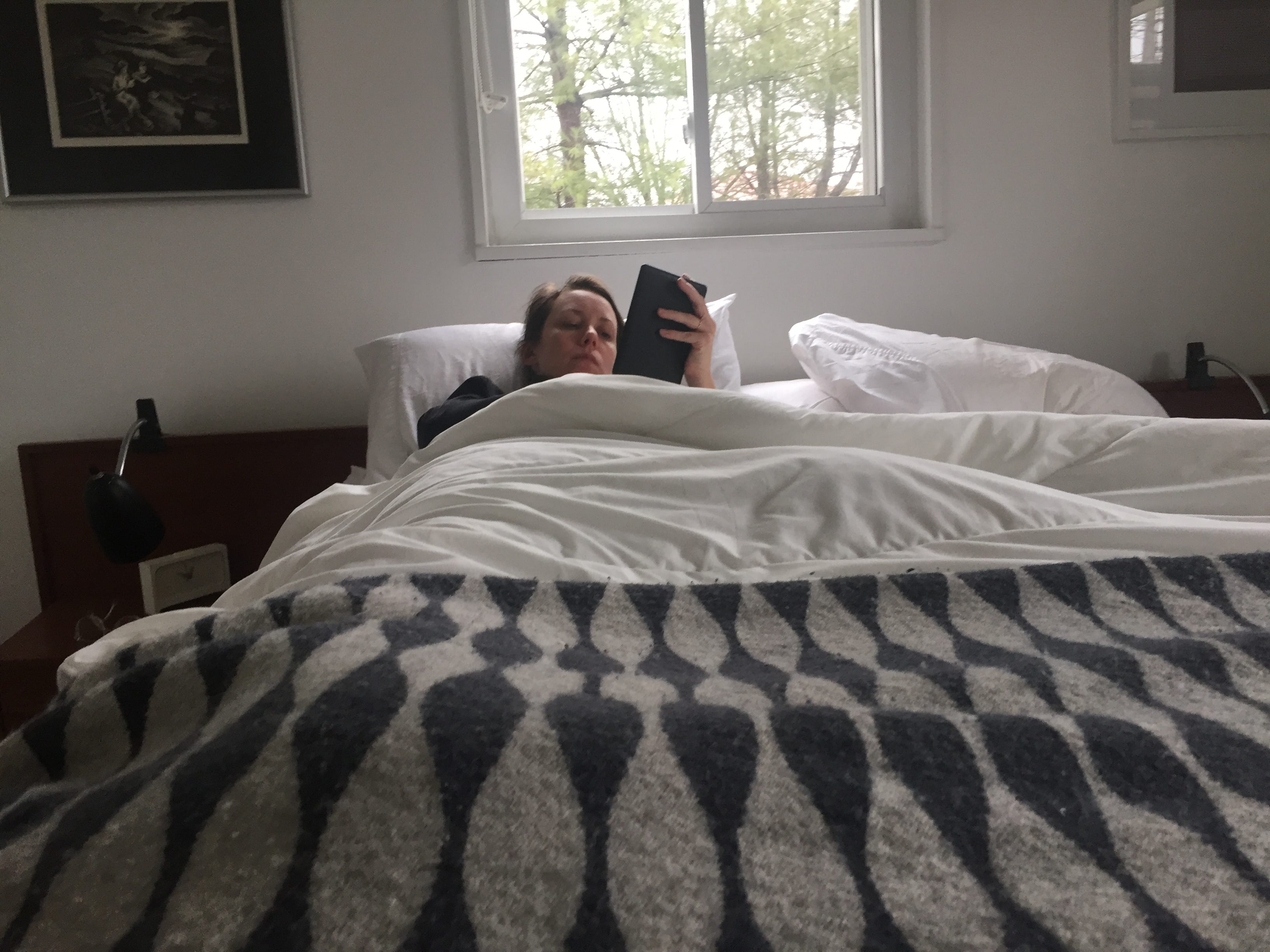
I fell into a deep depression, constantly comparing myself to others and how much they seemed able to do.
My mom had taught elementary school and raised three kids almost single-handedly. Why couldn’t I do what she had done? For that matter, what about all the other teachers at my school and at every school (here is where I say teachers should literally be paid a million dollars a year)?
Looking back, this was the very beginning of trying to come to terms with the limits of my capacity and it being different than others’. I’d been raised with a parent who considered therapy and depression only for yuppies who’d never experienced “real” struggle, but I was finally able to shrug off that belief enough to find my first therapist.
Let’s fast forward through the next bit as well.
After leaving teaching, I started over at the bottom – selling tickets for people whom I’d gone to music school and played in orchestras with, only they were on stage, and I was in the box office. I gradually worked my way up the ladder at the organization until I became the Director of Education.
Working at a non-profit, doing the jobs of multiple people, and the stress of producing concerts that 10,000 elementary school kids would see (don’t screw it up) led to my second burnout. I quit my job to start my styling business, as my bio says, “in an attempt to create a more emotionally sustainable lifestyle.” Two weeks later I found out I was pregnant.
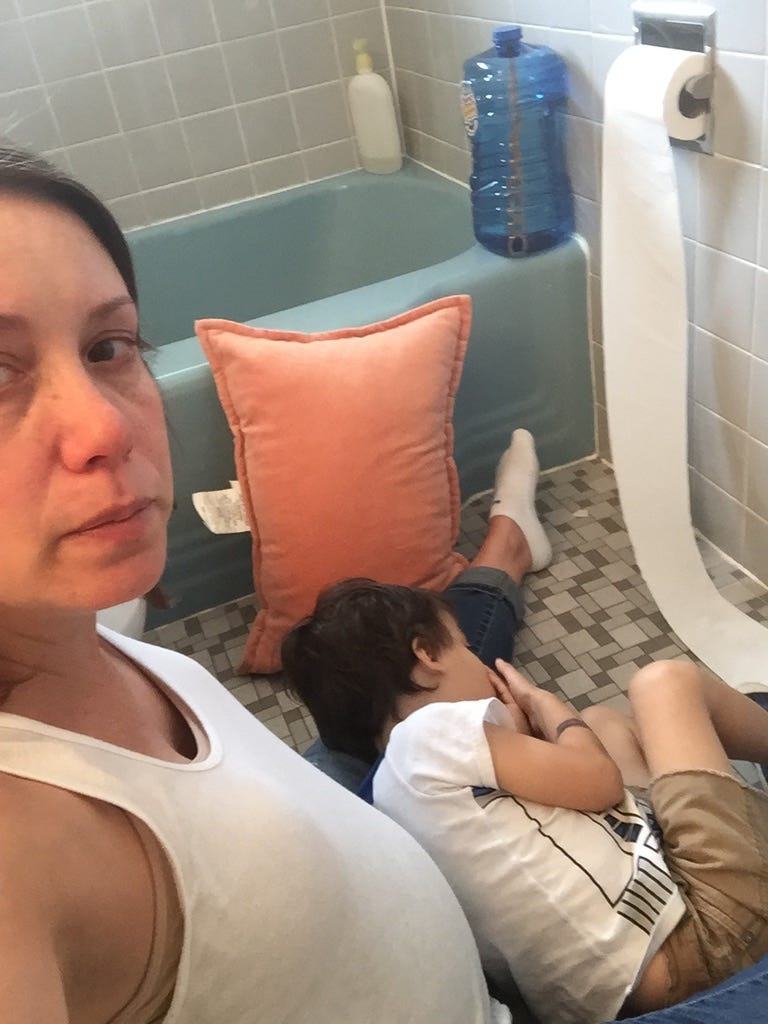
My children are now 7 and 11, and I’m not sure I’ve recovered from parenting burnout yet. If you’re counting, that’s three big burnouts before 40.
Unsurprisingly, exhaustion had always accompanied the stress. Being tired became part of my identity. People knew me as someone who yawned all the time. I could barely stay awake at my office job. Once, while I was subbing with a major orchestra, my boss for the week said to me, “Oh, are we boring you?” I was mortified.
As I tried to come to terms with my capacity, I began to learn things about myself that changed my perspective. Although I’d been experiencing depression and anxiety since puberty, I was finally able to accept it, even though I didn’t feel comfortable sharing about it until 2017, when I wrote this blog post. I learned that I was an introvert. I learned I was a highly sensitive person1 (or HSP, which some people consider a sugar coating of autism). In the early years of parenting a “spirited” child, while researching ADHD for my son, I recognized many of my own behaviors.
About three years ago, I realized I still felt exhausted and depleted all of the time, but I could no longer blame it on early motherhood or a stressful job. I was completely unable to function after 7pm or so. My brain fog was preventing me from doing some of the work I wanted to do. My neck pain sometimes had me working from bed, flat on my back. If there was a medical cause to my symptoms, I wanted to try to find it.
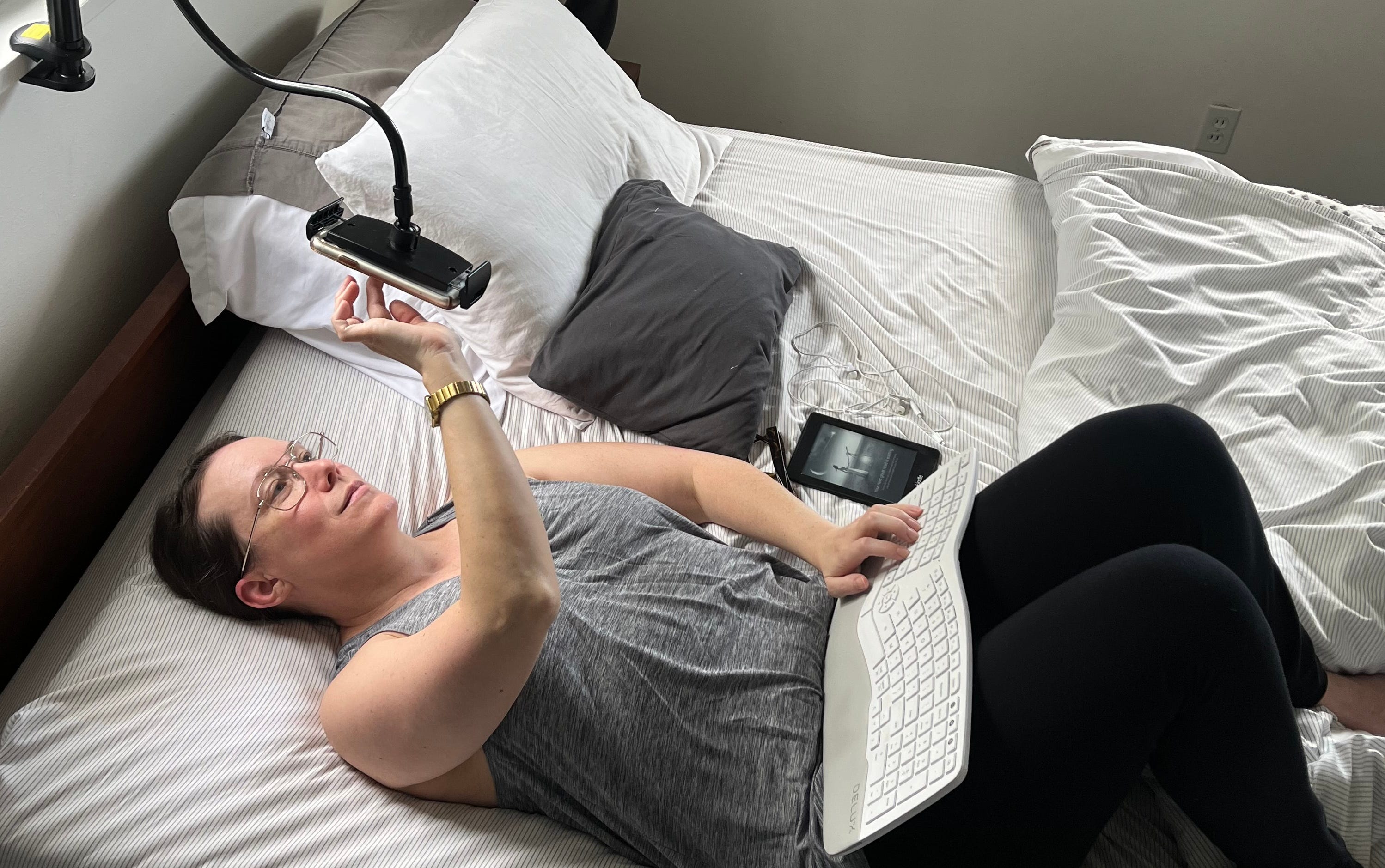
As you’d expect, my first stop was my family practitioner. She ran all the usual tests and found nothing, so we moved on. In the last three years, I’ve been to physical therapy for three rounds (none helped), had a sleep study (very mild sleep apnea, CPAP didn’t make a difference), an ADHD evaluation (was not diagnosed with ADHD, although I still believe I have it)2, hormone therapy (I had hoped that perimenopause was the root of it all, but nope), tried multiple new psychiatric drugs (no improvement), tried cutting out gluten (yep, when trying to find ways to feel better, even the best of us try diets), and saw a functional medicine doctor who manipulated me, gaslit me, and charged me $600 for a visit and $300 for “supplements” (I shared all about it on Christy Harrison, MPH, RD’s podcast).

In June of 2025, after a few searches for chronic fatigue, TikTok started serving me videos about a chronic illness I’d never heard of: